Spring pollen surges bring misery to allergy sufferers


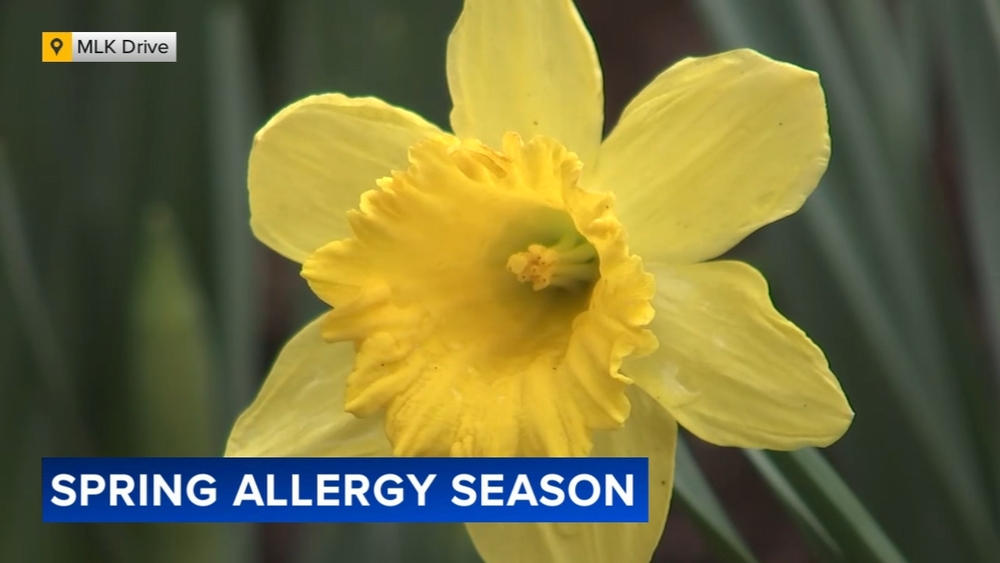
HAVERTOWN, Pa. (WPVI) -- An unusually hot spring day brought blooming trees and rising pollen - a combination that's proving difficult for people with allergies across the region.
At Darby Creek Trail in Havertown, Patrice Linker of Broomall said the season's beauty is hard to enjoy.
"The trees are so pretty, and they're all being flowered, and you can't enjoy it," Linker said.
Linker took her grandkids to the park, but said wind and pollen quickly took a toll.
"Itchy eyes, runny nose," she said.
Pollen falling from trees coated cars and created breathing challenges for allergy sufferers, especially those spending time outdoors.
Dr. Michael Prematta, an allergist with Delaware Valley Allergy, said allergy seasons are becoming more intense.
"With climate change, there's more pollen every year, so it actually is getting a little bit worse every year," Prematta said.
He said the coming weeks will be especially difficult for people with tree allergies as spring growth accelerates. Prematta added that pollen levels tend to be higher in and around large cities such as Philadelphia.
"When you're near a big city, you have a lot of pollution and then you have allergies in combination with it. It does two things: One, the pollution creates an irritant effect, nd then the second is that the pollution can push your immune system into a type two or allergic response," he said.
Prematta recommended several strategies to manage symptoms, including nasal rinses, sprays and over-the-counter medications. He said people should see an allergist if symptoms persist.
"If you're going to be doing things like lawnmowing or gardening, I'd suggest wearing a mask and showering as soon as you get inside," he said.
Back at the park, Havertown resident Usha Manohnan said it took years to identify what was triggering her allergies.
"I tried different inhalers, but it didn't work," Manohnan said.
She said she eventually found relief after changing her approach.
"Nothing worked, so I tried to improve my immune system and that did it," she said.
Allergists also recommend wearing sunglasses and a hat outdoors to protect eyes and hair from pollen.